Feeling a bit overwhelmed by all those profiles you’re swiping through? Maybe you’ve matched with someone who seems too good to be true, or you’ve had a conversation that felt a bit off. It’s totally normal to wonder, “Is this person for real?”
Let’s face it: fake profiles are a real pain when you’re trying to make genuine connections. They can leave you feeling frustrated, disappointed, or even a bit scared.
Whether you’re new to Bumble or you’ve been using it for a while, spotting these fakes can be tricky. But don’t worry – I’ve got your back.
In this article, we’re going to chat about how to protect yourself while you’re swiping and chatting on Bumble. I’ll share some easy-to-spot signs of fake profiles and give you practical tips to help you navigate the app more safely.
Why should you care about fake profiles?
Let’s talk about why spotting fake profiles really matters to you right now. If you’re on Bumble, you’re probably looking for real connections, right? Maybe a fun date, a new friend, or even something more serious. But fake profiles can totally throw a wrench in those plans.
Think about it – you match with someone who looks amazing. You’re excited, you start chatting, and then… something feels off. Maybe they’re pushing to meet too fast, or their stories don’t add up. Suddenly, you’re feeling uneasy instead of excited. That’s not what you signed up for!
Fake profiles aren’t just annoying – they can be downright dangerous. Some are set up by scammers trying to get your personal info or money. Others might be using fake pics to catfish you. And even if it’s just someone pretending to be single when they’re not, it’s still a waste of your time and energy.
By learning to spot these fakes, you’re protecting yourself from potential scams and disappointments. You’re making sure your time on Bumble is spent talking to real people who are genuinely interested in connecting. Plus, you’ll feel more confident as you swipe, knowing you can trust your gut when something seems fishy.
And Bumble’s not just another dating app. It’s designed to make online dating less of a hassle and more of a genuine experience. One of its standout features is photo verification, which adds an extra layer of security. This means you’ve got a better shot at meeting real people who are actually interested in connecting.
How can you spot a fake Bumble profile?
Alright, let’s get down to business. Here are some key things to look out for:
1. Check out their photos
Look for authenticity in the pictures. Real profiles usually have a mix of candid and posed shots. If all the photos look like they’re straight out of a magazine, that might be a red flag. Trust your gut – if something looks off, it probably is.
2. Read their bio carefully
Pay attention to how the bio is written. Fake profiles often have vague or super generic bios. If it feels like it could apply to anyone, be cautious. Real people tend to share specific interests or quirks that make them unique.
3. Notice how they communicate
Be aware of how they respond to your messages. If their answers seem copy-pasted or don’t quite fit with what you’re saying, that’s suspicious. Real conversations have a natural flow, even if there are a few awkward moments.
4. Look them up on social media
Try to verify their existence outside of Bumble. Most genuine people have some kind of online presence. A quick search on platforms like Instagram or Facebook can help confirm if they’re real. Just remember, not everyone is big on social media, so don’t panic if you can’t find them.
5. Trust your instincts
Your gut feeling is a powerful tool. If something feels off, it probably is. Don’t ignore those little warning bells in your head. It’s better to be cautious than to get caught up in a scam.
What are some red flags to watch out for?
Let’s dive a bit deeper into some specific signs that might indicate a fake profile:
1. Incomplete profiles. If a profile looks half-finished, that’s often a bad sign. Real users usually take the time to fill out their information properly.
2. Poor quality or missing face shots. Be wary of profiles with no clear face pictures. While not everyone is a photography pro, most genuine users will have at least one good, clear photo of themselves.
3. Poorly written bios. Watch out for bios that don’t make sense or are full of errors. While not everyone’s a writer, most real people can put together a coherent sentence or two about themselves.
4. Constant “bad luck” stories. If your match is always having dramatic emergencies, especially before you’re supposed to meet, that’s suspicious. Life happens, but the constant drama is a red flag.
5. Mismatched conversations. Pay attention if their responses don’t quite fit your questions. This could mean you’re talking to a bot or someone using translation tools.
6. Pushing to other platforms. Be cautious if they’re eager to move the conversation off Bumble right away, especially to unfamiliar websites.
What should you do if you suspect a fake profile?
1. First things first, trust your instincts. If something feels off, it probably is. You’re not being paranoid; you’re being smart. If you haven’t matched yet and you’re getting weird vibes from a profile, just swipe left and move on. There are plenty of real people out there waiting to meet you.
2. Now, what if you’ve already matched and started talking? No worries, you’re not stuck. You can unmatch them right away. It’s quick, easy, and you don’t owe them any explanation. Your safety and comfort come first, always.
3. If you’re pretty sure the profile is fake and you want to help other Bumble users, you can report the profile. Bumble takes fake profiles seriously, and your report can help keep the community safer for everyone. It’s like being a dating app superhero!
4. Never share personal info with someone you’re unsure about. That includes your phone number, email, home address, or any financial information. And if they send you links? Don’t click on them, no matter how tempting they might seem.
5. If a conversation is making you feel uncomfortable, it’s totally okay to end it. You don’t need to explain yourself or feel bad about it. Your wellbeing is the priority.
Can you be catfished on Bumble?
Let’s talk about catfishing because, yes, it can happen on Bumble, too. Catfishing is when someone pretends to be someone they’re not online, often using fake photos and made-up stories. It’s not fun, and it can really mess with your head.
While Bumble has some great safety features, no dating app is 100% catfish-proof. Some people are pretty crafty about creating fake personas. But don’t let that scare you off! Being aware is half the battle.
If someone’s story seems too perfect or their photos look like they’re straight out of a magazine, take a step back. Real people have flaws and take normal photos. If something feels off, it probably is.
Remember, it’s okay to be cautious. Take your time getting to know someone before meeting in person or sharing personal info. And if you do meet up, always choose a public place for that first date.
Should you use a fake name on Bumble?
Now, you might be wondering if you should use a fake name to protect yourself. Here’s my take: using your real first name is usually fine. Bumble’s designed with your privacy in mind, especially for women who get to make the first move.
If you’re still concerned, using a nickname or just your first name is a good middle ground. It keeps things personal without giving away too much. The key is to feel comfortable while still being authentic.
How does Bumble verify accounts?
Bumble takes verification seriously. They handle it all in-house, which means their own team at Bumble HQ takes care of it. No outsiders were involved. This helps keep things secure and legitimate.
When you see a blue checkmark on a Bumble profile, it means that the person has gone through Bumble’s verification process. It’s a good sign that you’re dealing with a real person who is who they say they are.
How do you spot a dating bot?
Ah, dating bots. They’re like the annoying pop-up ads of the dating world. Here’s how to spot them:
- Too-perfect profiles: If every photo looks like a model shot and the bio reads like a cheesy rom-com, be suspicious.
- Robotic responses: Bots often give generic answers that don’t quite fit the conversation. If it feels like you’re talking to a very confused person, it might be a bot.
- Quick sales pitch: If they start pushing you to buy something or visit a website super fast, that’s a big red flag.
- Unnatural conversation flow: Real people have a rhythm to their chat. Bots often respond too quickly or at odd hours without breaks.
How can you delete a fake Bumble account?
If you need to delete an account, here’s how:
- Open the Bumble app on your phone.
- Tap your profile picture in the top left corner.
- Click on the Gear icon (Settings).
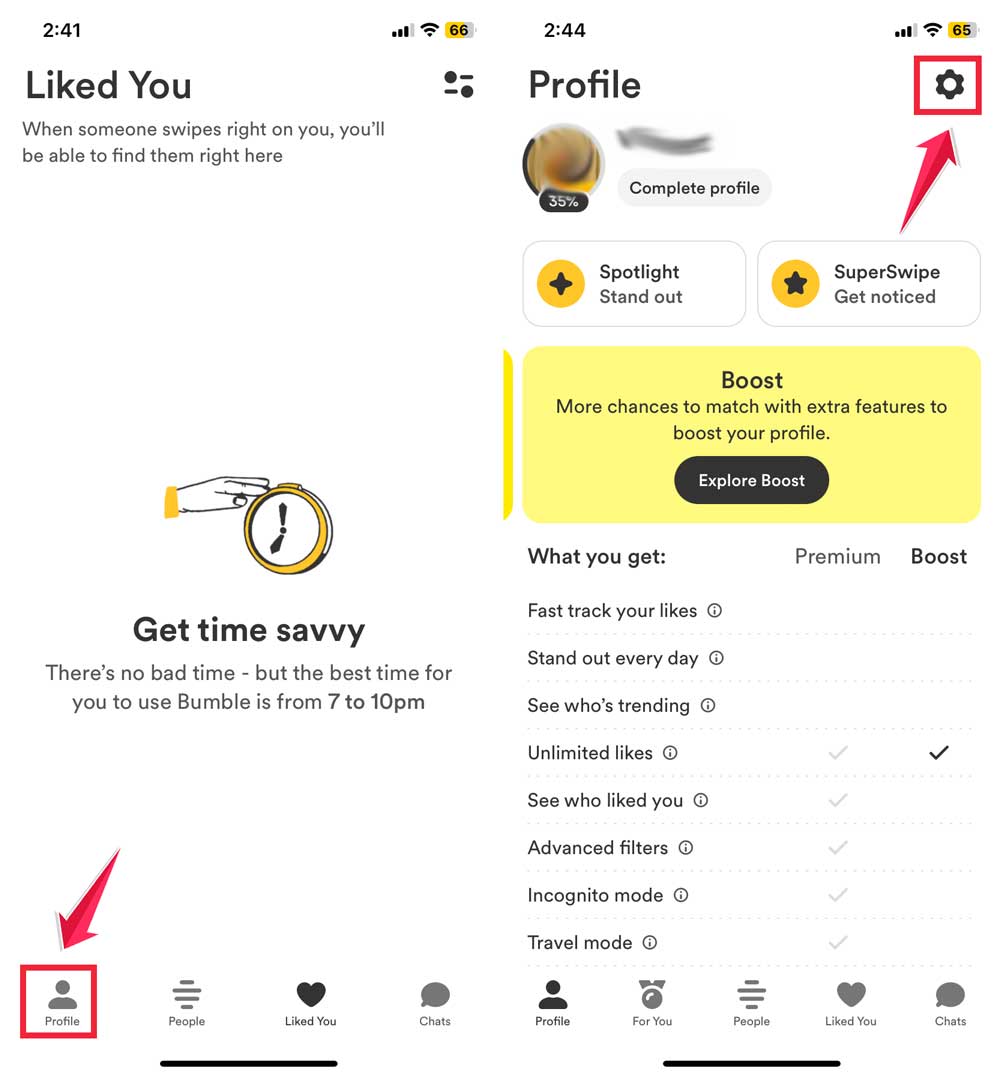
- Scroll down to find “Delete account” in your settings.
- Tap “Delete account”.
- Choose a reason for leaving (optional).
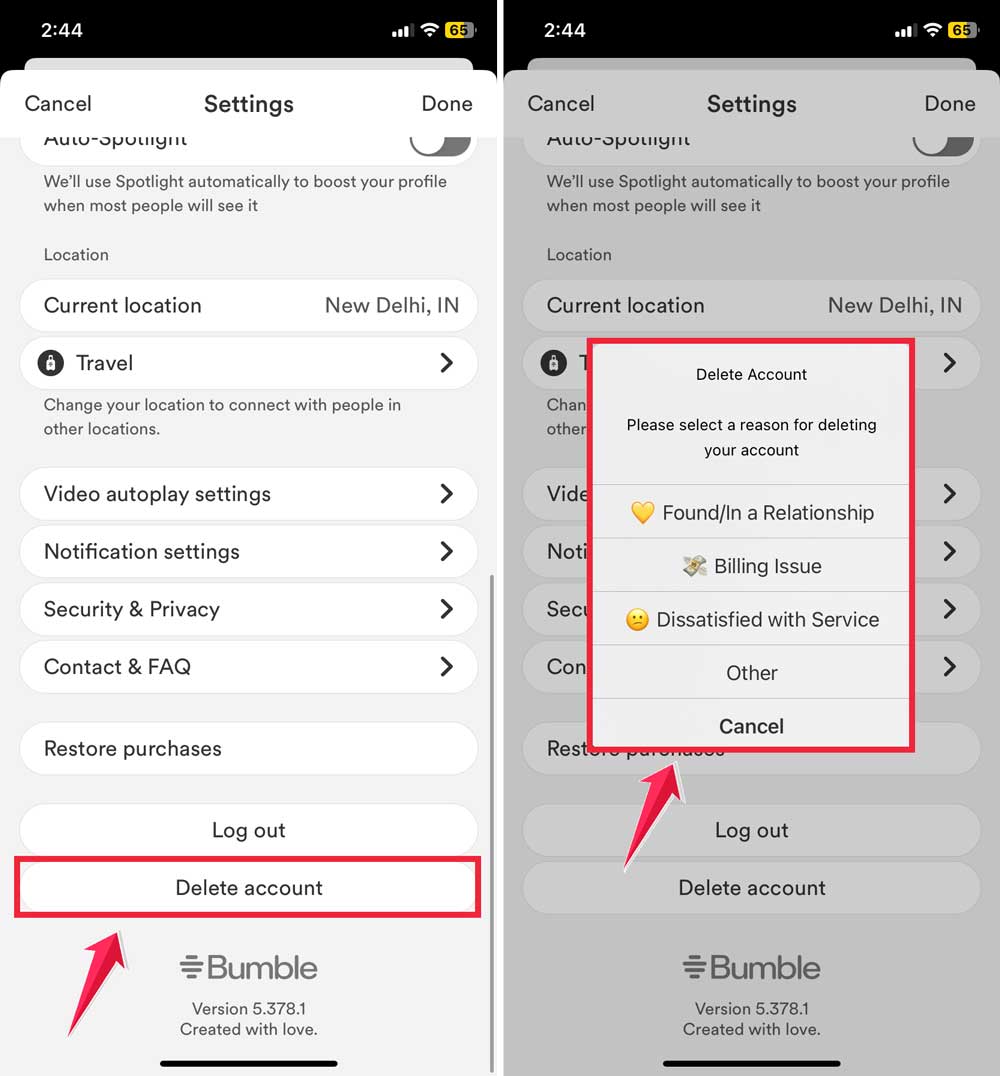
- Click on “Delete account“
- Enter your password when prompted.
- Type “Delete” on the final confirmation screen.

Remember, once you delete your account, it’s gone for good, so be sure before you take this step.
The takeaway
Alright, let’s wrap this up! You’ve just leveled up your Bumble game, and that’s something to be proud of. Spotting fake profiles might seem tricky, but you’ve got the tools to do it now.
Remember, trust your gut. If something feels off, it probably is. Don’t be afraid to unmatch or report profiles that seem sketchy. It’s not just about protecting yourself – you’re helping keep Bumble safe for everyone.
Here’s the thing: real connections take time. Don’t rush into sharing personal info or meeting up too quickly. Take your time, enjoy the chat, and let things develop naturally.
You’re on Bumble to meet awesome people, right? So go out there and do just that! With these tips in your back pocket, you can swipe with confidence. You’ve got this!